


Artificial intelligence is no longer a futuristic concept it is now a daily business tool. One of the most impactful innovations in this space is ChatGPT, which organizations across industries are using to streamline operations, improve communication, and unlock productivity.
- What is ChatGPT for Business?
- Why Businesses Are Rapidly Adopting ChatGPT
- Customer Support Automation
- Marketing & Content Creation
- Email & Communication Management
- HR & Employee Management
- Data Analysis & Reporting Assistance
- Sales Enablement & Lead Conversion
- Knowledge Management & Documentation
- Decision Support & Brainstorming
- Best Practices for Using ChatGPT in Business
- Challenges Businesses Should Consider
- Future of ChatGPT in Business
- Conclusion
This article explores ChatGPT for Business – Practical Use Cases that companies of all sizes can implement without needing advanced technical knowledge. Whether you run a startup, small business, government office, or enterprise, these real world applications can help you work smarter.
What is ChatGPT for Business?
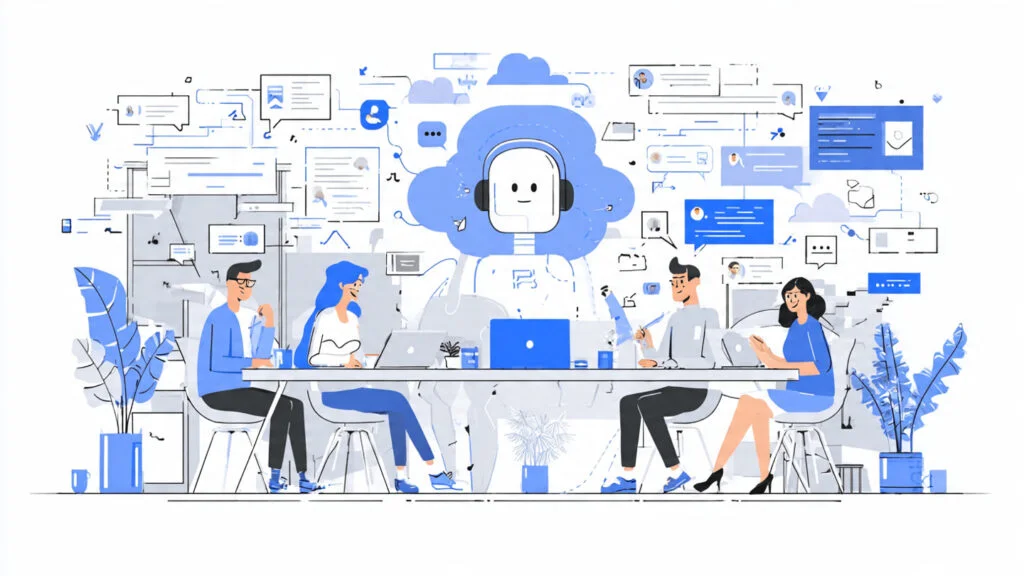
ChatGPT for Business refers to using conversational AI technology to assist with business tasks such as communication, automation, content creation, analysis, and customer interaction.

Instead of replacing employees, ChatGPT acts as a digital assistant that can:
- Generate text and ideas
- Answer queries instantly
- Draft documents and emails
- Analyze information
- Support decision-making
The real strength of ChatGPT for Business – Practical Use Cases lies in its flexibility across departments.
Why Businesses Are Rapidly Adopting ChatGPT
Businesses adopt AI when it delivers measurable benefits. ChatGPT provides:
- Time savings – Routine writing, responses, and documentation are completed in minutes.
- Cost efficiency – Reduces dependency on repetitive manual tasks.
- Consistency – Maintains uniform communication tone and quality.
- Scalability – Supports growing workloads without proportional hiring.
Because of these advantages, ChatGPT for Business – Practical Use Cases continue expanding across industries.
Customer Support Automation
Customer support is one of the most popular use cases.
How ChatGPT helps:
- Instant replies to FAQs
- Email response drafting
- Complaint acknowledgment messages
- Support ticket summarization
Business impact:
- Faster response time
- Improved customer satisfaction
- Reduced support workload
Many organizations implement ChatGPT as a first level support assistant, making this a core ChatGPT for Business – Practical Use Cases example.
Marketing & Content Creation

Marketing teams spend significant time producing content. ChatGPT accelerates this process.
Practical applications:
- Blog outlines and drafts
- Social media captions
- Product descriptions
- Ad copy variations
- Video script ideas
Result:
Teams focus more on strategy while AI handles first draft a powerful ChatGPT for Business – Practical Use Cases scenario.
Email & Communication Management
Professional communication is critical but time consuming.
ChatGPT enables:
- Formal email drafting
- Follow-up reminders
- Meeting summaries
- Internal announcements
- Client proposal templates
For offices and government environments, this becomes a daily productivity booster and a key ChatGPT for Business – Practical Use Cases example.
HR & Employee Management
Human resources departments are increasingly using AI assistance.
Common uses:
- Job description creation
- Interview question preparation
- Employee onboarding guides
- Policy document drafting
- Training content development
This improves HR efficiency while maintaining documentation quality.
Data Analysis & Reporting Assistance
While ChatGPT is not a full analytics tool, it supports interpretation and presentation.
Examples:
- Explaining spreadsheet data
- Drafting report summaries
- Creating executive briefings
- Generating insights narratives
Managers save time converting raw information into readable reports another valuable ChatGPT for Business – Practical Use Cases.
Sales Enablement & Lead Conversion
Sales teams benefit from AI-assisted communication.
Use cases:
- Sales pitch refinement
- Proposal writing
- Objection handling scripts
- Follow up message drafts
- CRM note summarization
This improves response quality and conversion consistency.
Knowledge Management & Documentation
Organizations often struggle with scattered knowledge.
ChatGPT can help by:
- Creating SOP drafts
- Document summarization
- FAQ knowledge bases
- Training manuals
- Workflow documentation
Centralized knowledge improves onboarding and operational continuity.
Decision Support & Brainstorming
ChatGPT acts as an idea partner.
Business leaders use it for:
- Strategy brainstorming
- SWOT analysis drafts
- Business model ideas
- Process improvement suggestions
- Risk identification discussions
Many professionals also use AI assistance to analyze financial trends, market news, and trading strategies before making investment decisions. While human judgment remains essential, AI accelerates thinking.
Best Practices for Using ChatGPT in Business
To maximize value:
- Provide clear prompts – Specific instructions produce better outputs.
- Maintain human review – AI assists humans finalize.
- Protect sensitive data – Avoid sharing confidential information unnecessarily.
- Standardize workflows – Create internal prompt templates.
Following these practices ensures sustainable adoption of ChatGPT for Business – Practical Use Cases.
Challenges Businesses Should Consider
Despite benefits, organizations must address:
- Data privacy concerns
- Over-reliance on AI
- Accuracy verification
- Change management
- Employee training
Awareness of these factors leads to responsible implementation.
Future of ChatGPT in Business

The future direction indicates:
- Deeper workflow integration
- Multimodal capabilities
- Personalized AI agents
- Department-specific AI copilots
- Real-time business intelligence assistance
As AI matures, ChatGPT for Business – Practical Use Cases will shift from optional productivity tools to standard workplace infrastructure.
Conclusion
ChatGPT is transforming business operations not through automation alone but through augmentation helping people perform better and faster.
From customer support to strategy planning, the range of ChatGPT for Business – Practical Use Cases demonstrates that AI is becoming an everyday business companion. Organizations that adopt thoughtfully, maintain human oversight, and standardize usage will gain the greatest advantage.
The key takeaway is simple: Businesses that learn to collaborate with AI today will lead tomorrow.